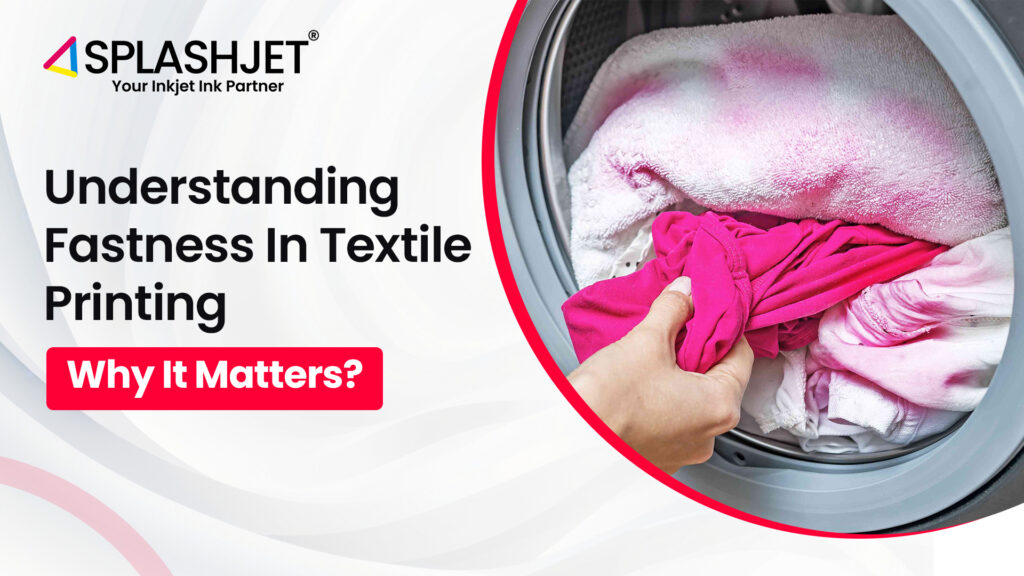
In textile printing, fastness is crucial for determining how well printed colours resist fading, bleeding, or transferring due to washing, light, rubbing, and perspiration, ensuring products maintain their appearance, quality, and value, preventing customer complaints, and meeting performance standards for specific uses like apparel or upholstery. It’s the backbone of a printed textile’s longevity, directly impacting brand reputation and product performance.
Types of Fastness & Their Standards In Textile Printing
As described earlier, there are 4 main types of Fastness, which determine the commercial acceptability of the fabric for consumers. Below, we have described the types of Fastness along with their standards for commercial production.
A.Wash Fastness
Wash fastness determines how well printed colours withstand repeated laundering. Poor wash fastness results in fading, patchiness, or staining of other garments. Wash fastness is essential for daily-wear textiles such as T-shirts, bedsheets, kidswear, and uniforms.
| Standards | Rating | Qualitative Description |
|---|---|---|
| 5 | Excellent | |
| 4-5 | Very Good to Excellent | |
| 4 | Very Good | |
| ISO 105-C | 3-4 | Good to very good |
| AATCC 61 | 3 | Good |
| 2-3 | Fair to Good | |
| 2 | Fair | |
| 1-2 | Poor to fair | |
| 1 | Poor |
For more information, read – AATCC 61 fastness test methods
Wash fastness of a fabric is carried out on two parameters :
- Colour change test: Loss of colour after washing.
- Staining: Evaluates the transfer of colour from the printed fabric to other fabrics during washing.
Together, these tests determine the overall wash fastness performance of fabrics.
B.Light Fastness
Light fastness measures a print’s resistance to fading when exposed to sunlight or artificial UV light. Fabrics used in curtains, upholstery, sportswear, and outdoor décor require high light fastness to maintain their colour over time.
| Standards | Rating | Qualitative Description |
|---|---|---|
| 8 | Outstanding | |
| 7 | Excellent | |
| 6 | Very good | |
| ISO 105-B02 | 5 | Good |
| AATCC 16 | 4 | Moderate |
| 3 | Fair | |
| 2 | Poor | |
| 1 | Very poor |
C.Rub Fastness
Rub fastness (dry and wet) assesses the likelihood of colour transferring when the fabric is rubbed. Garments that experience frequent friction — like denim, leggings, jackets, and sportswear—must have excellent rub fastness to avoid smudging and colour loss.
| Standards | Rating | Qualitative Description |
|---|---|---|
| 5 | Excellent | |
| 4-5 | Very good to excellent | |
| 4 | Very good | |
| ISO 105-X12 | 3-4 | Good to very good |
| AATCC 8,116 | 3 | Good |
| 2-3 | Fair to good | |
| 2 | Fair | |
| 1-2 | Poor to Fair | |
| 1 | Poor |
D.Perspiration Fastness
Perspiration fastness evaluates a print’s behaviour when exposed to sweat and body heat. Activewear, innerwear, and summer garments are especially prone to such conditions. Sweat can interact with dyes, causing fading or staining if the fastness is poor.
A minimum fastness level of 4+ is typically required for the sportswear and athleisure sectors.
Standards Rating Qualitative Description
5 Excellent
ISO 105-E04 4 Good
AATCC 15 3 Fairly Good
2 Fair
1 Poor
Importance of Fastness Performance – (Insights, Practical & Implications)
| Sr | Fastness Type | Insights | Importance for Manufacturers | Importance for Brands |
|---|---|---|---|---|
| 1. | Colour to wash fastness | Measures how much colour a fabric loses or transfers during laundering. | Reduces re-dyeing and improves process consistency. | Fewer product returns; reliable product performance; accurate care-label guidance. |
| 2. | Colour to light fastness | Indicates the fabric’s ability to resist fading when exposed to sunlight or artificial light. | Ensures suitable dyes for intended use; minimises batch failures. | Ideal for home textiles/outdoor products; supports long-lasting product appeal. |
| 3. | Colour to rub fastness | Reflects the likelihood of colour rubbing off onto other surfaces in dry or wet conditions. | Optimise dyeing/printing to reduce complaints and production issues. | Reduce customer complaints about dye transfer; enhances brand trust. |
| 4. | Colour to perspiration fastness | Evaluates how body sweat affects fabric colour in acidic and alkaline conditions. | Guides the selection of dyes for sportswear & summer garments, reducing defect rates. | Ensures safer, more reliable apparel for active/lifestyle segments. |
Factors Influencing Fastness Performance :
-
- Fabric Type & Structure: Fabric type and structure directly affect fastness performance by controlling ink absorption, compatibility, and retention within the textile. Fibre composition influences ink selection and fixation, while fabric density, surface smoothness, absorbency, and porosity determine ink penetration, anchoring, and colour depth.
- Ink Chemistry: The pigment–binder relationship is key to fabric fastness, as the binder anchors pigment particles to the fabric surface. Poor binder performance or curing leads to colour loss, crocking, and reduced durability.
- Pretreatment & Post-Treatment: Pretreatment ensures uniform ink absorption, while post-treatment processes like steaming, washing, or curing lock the colour in place. Skipping any of these steps weakens bonding and reduces overall fastness.
- Fixation Method: Proper control of temperature, pH, dyeing time, and chemical auxiliaries ensures maximum dye absorption and bonding.
- Environmental & Handling Conditions: Humidity, storage, and garment care influence long-term fastness.
For more information, read – Importance of Curing in Digital Textile Pigment Printing
How Manufacturers Can Improve Fastness :
- Fabric Quality: Fastness begins with the quality of the fabric. Fabrics that are clean, uniform, and consistent absorb ink better. Uneven fibres or impurities can weaken ink bonding and reduce colour durability.
- Fabric Preparation: PFP (Prepared for Print) fabrics are generally processed to remove various oils, waxes, sizing agents, etc., used during various stages of manufacturing.
- Ink Capability: The quality of the ink strongly affects fastness. Well-formulated inks with suitable dyes and strong binders bond better with the fabric. Ink compatibility with the material and printhead also helps maintain long-lasting colour.
- Pre-treatment & Post-treatment: Removing residues and applying the right pre-treatment improves ink absorption. Correct pH and moisture levels ensure even colour fixation. Post-treatment plays a key role in improving fastness. Proper washing removes unfixed colour, while suitable finishing chemicals improve colour durability and resistance to washing, rubbing, and fading.
- Use Proper Fixation/Curing: Applying the correct temperature, pressure, and time during the steaming or curing process locks the colour into the fabric, while maintaining consistent heat distribution and avoiding under- or over-curing to ensure strong bonding and long-lasting colour retention.
Fastness reflects how well a textile endures real-life conditions—washing, rubbing, light, and heat. Understanding and improving fastness helps manufacturers create durable, high-quality garments. By using the right inks, optimising processes, and testing regularly, brands can ensure long-term product value, customer satisfaction, and stronger sustainability.