Corrugated box printing plays a crucial role in brand communication and packaging appeal, but it’s not without its challenges. From ink clarity to environmental compliance, even the smallest issue can compromise print quality, production efficiency, or cost. In this article, we explore 8 of the most common printing challenges and share practical solutions that help to maintain high standards without sacrificing sustainability with performance.
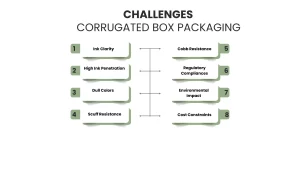
Challenges in corrugated box packaging
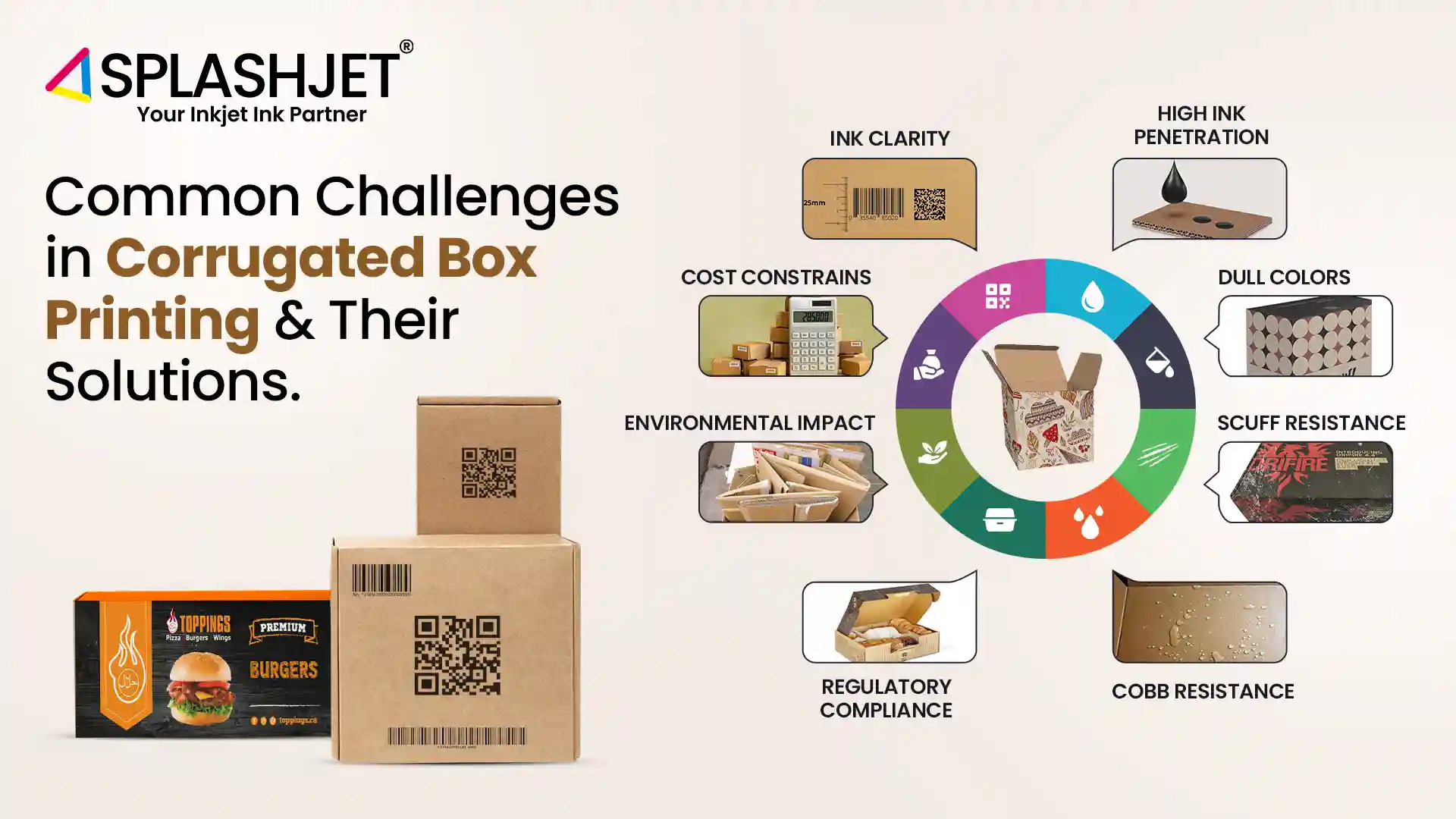
1. Ink Clarity
Corrugated boxes have a porous and semi-porous surface. Its natural wood tones and absorbent texture can reduce ink clarity and image sharpness. This poses challenges in printing critical information like expiry dates, batch numbers, and barcodes, which must remain clear and legible. Poor clarity can lead to scanning errors, miscommunication, and supply chain delays.
2. High Ink Penetration
High ink penetration is a common challenge in corrugated box printing. This porosity causes the ink to be absorbed quickly, leading to faded images, which compromises print appeal. In food packaging applications, excessive ink penetration can be even more problematic, as the ink may come into contact with the product, potentially leading to contamination and posing health risks.
3. Dull colors
The absorbent nature of both porous and semi-porous corrugated boards can significantly impact the vibrancy of printed colors, often making them appear dull or washed out. This effect is influenced by several factors, including surface porosity, the type of ink used, the printing process, and the coating or texture of the board. Together, these elements affect ink absorption, coverage, and overall color brilliance.
4. Scuff Resistance
Scuff resistance in corrugated box printing refers to the ability of the printed text or design to withstand damage caused by rubbing or abrasion. It is a critical factor in maintaining print quality, especially during handling and transportation.
5. Cobb Resistance
Cobb resistance measures a box’s ability to absorb water over time, which is crucial for protecting structural integrity in humid conditions. Low resistance can cause excess water absorption, affecting ink drying and leading to smudging, bleeding, and dull colors.
6. Regulatory Compliance
Direct or indirect contact of ink with food or packaged materials can pose a risk to human health. Therefore, it is essential to follow the necessary safety guidelines and regulatory standards. In our previous article, “Evolution of Aqueous Packaging Inks – A Custom Approach to Excellence”, we discussed the importance of safety and regulatory compliance in detail.
7. Environmental Impact & Waste Management
Despite being applied to recyclable materials like paper and cardboard, conventional solvent-based inks and varnishes create significant obstacles in the recycling process. These inks interfere with de-inking, making it difficult to cleanly separate the ink from paper fibers. This results in lower-quality recycled pulp and reduces the overall efficiency and sustainability of the recycling process.
As the packaging industry shifts towards on-demand digital printing for greater flexibility and customization, the problem becomes even more critical. The increased use of diverse ink formulations in short-run jobs adds complexity to recycling systems.
8. Cost Constraints
Corrugated box printing involves various factors that can impact overall costs. Factors as small order volume, high ink consumption due to poor absorption, machine downtime, and regulatory compliance.
How do water-based inks offer a solution to these?
Water-based ink has emerged as an all-in-one solution for addressing the key challenges in corrugated box printing across both porous and non-porous surfaces. Here’s how:
| Feature | Description |
|---|---|
| Better Absorption on Porous & Non-Porous Surfaces | Ensures even penetration on all substrates, avoiding smudging and dullness for vibrant, clear prints. |
| Controlled Drying Time | Dries efficiently on coated surfaces using low heat and additives to speed up the drying process. |
| Improved Print Quality | Delivers sharp images, rich colors, and strong adhesion on corrugated fiberboards. |
| Eco-Friendly & Compliant | Very low VOCs and heavy metals; safe for food packaging and environmentally responsible. |
| Enhanced Durability | Resistant to scuffing, moisture, and rubbing—ideal for logistics and retail use. |
In the evolving landscape of corrugated box printing, Splashjet continues to strengthen its capabilities with advanced water-based ink solutions—a definitive choice for modern packaging. These inks deliver exceptional clarity, long-lasting durability, regulatory compliance, and environmental responsibility.
By effectively addressing challenges such as ink penetration, surface compatibility, and cost efficiency, water-based inks are redefining industry standards. They ensure high precision and sustainable performance without compromise, making them the preferred choice for the future of corrugated printing.